Showing posts with label Sri Lankan civil war was fought. Show all posts
US Court grants permission to serve summons on Rajapakse via Tamilnet

"After service is effectuated, President Rajapaksa will be compelled to respond to the Complaint’s accusations in a court of law uncompromised by partisan politics. It can be expected that President Rajapaksa will retain an army of luxury-priced lawyers to defend him, who will attempt to throw technical legal obstacles to thwart justice.
"We urgently need all available financial and moral support to achieve victory not only for the three named Plaintiffs, but for all the victims of President Rajapaksa’s atrocities. A judgment in our favor in this case would set a precedent that would underwrite copy-cat TVPA suits by other victims of Rajapaksa endorsed or sponsored extra-judicial killings or torture.”
how international silence enabled Sri Lanka’s genocide

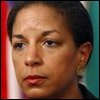
In March 2009 Sri Lanka had come to the attention of the UN’s Special Adviser for the Prevention of Genocide, Francis Deng, but despite his disquiet he did not take further steps as Sri Lanka had assured him the United States and India supported its military campaign, according to a leaked US cable. The account of the meeting on March 16, 2009 between Mr. Deng and the US Ambassador to the UN, Susan Rice, as well as other US cables, shows how international inaction and silence, rather than ignorance, made it possible for Sri Lanka to continue and escalate its mass killings of Tamil civilians.
U.S. Ambassador to the U.N. Susan Rice

Francis Deng, Special Adviser for the Prevention of Genocide

Robert O'Blake, Former Ambassador to Sri Lanka
The discussion on Sri Lanka is summarised thus:
“Deng spoke of conversations that he had with that [Sri Lanka’s] permanent representative to the United Nations. The Sri Lankan perm rep told Deng that his country's actions in mounting an offensive against the Liberation Tigers of Tamil Elan (LTTE) in the north of Sri Lanka were known to its friends the United States and India.
“The Sri Lankan representative left the impression that his government's measures against the LTTE are supported by the US and India.
“A visit to Sri Lanka left Deng impressed with the great cleavages between the Sinhalese and Tamils that would not be solved by the government's victory on the battlefield.”
US knowledge and silence
There is no indication in the cable that Ambassador Rice had either contradicted Sri Lanka’s assertion, or raised the issue of mass casualties amongst civilians being inflicted by the ongoing attacks and humanitarian blockade by the Colombo government – though these were discussed in relation to Sudan.
This is despite, just two days before the Deng-Rice meeting, US Secretary of State Hillary Clinton having called Sri Lankan President Mahinda Rajapaksa over the mass killings of civilians by government forces.
For at least two months earlier, international rights organisations like Human Rights Watch were highlighting the shelling of hospitals and other civilian targets.

Invisible massacre in Sri Lanka (Courtesy: Chappatte cartoon)
Ambassador Blake told Mr. Bogollogama Sri Lanka’s denials of civilians being shelled by government forces “was simply not credible, given multiple, credible, independent sources on the ground in the safe zone.”
Calling Sri Lanka’s blocking of medical supplies into the Tamil areas “unconscionable”, Mr. Blake warned Mr. Bogollogama that if government forces took the safe zone by force thousands, perhaps tens of thousands, could be killed and that if such casualties occurred, the government would be accused of war crimes.
‘Push back’ on genocide
None of these US concerns were however expressed in public, enabling Sri Lanka to continue its murderous onslaught against the Tamil population untrammelled by any international pressure.
The only voices protesting vehemently against Sri Lanka’s mass killings were some international human rights organisations and the Tamil Diaspora, who staged mass demonstrations in western capitals. And they were largely ignored.
Another US cable sent on March 4, for example, notes that embassy staff were receiving a daily “flood of emails” from concerned Diaspora Tamils calling for a ceasefire and focusing on conditions of civilians in the safe zone and internment camps.
In response, the cable says, US officials were “pushing back” against allegations of genocide, “calling it an overstatement.”
Yet barely a month later, on April 18, 2009 , Ambassador Blake - again privately - told Sri Lankan officials that “comparisons are already being made to what transpired in Rwanda” and international action on Sri Lanka’s actions.
Separately, also in early April, senior UN officials told representatives of Tamil groups including the US-based TAG (Tamils Against Genocide), that there was a “divided opinion” within the UN as to whether what was unfolding in Vanni was genocide or not.
But in public the UN not only maintained a total silence on the mass killings, but even sought to play down the numbers of civilian casualties.
Little wonder, then, that Sri Lanka could confidently assert to the international community, as it had to Mr. Deng, that the US and India were supportive of its military offensive.
In April 2011, the report by a panel of experts appointed by UN Secretary General Ban Ki-Moon not only said it found credible that 40,000 civilians had been killed in five bloody months, adding that “most civilian casualties in the final phase of the war were caused by government shelling”
Amongst their recommendations was that the UN’s own actions in the period be looked at. Last week Mr. Ban appointed former UN Population Fund chief Thoraya Obaid to conduct a review.
Citing judgments of the International Criminal Tribunal for the former Yugoslavia and other precedents, TAG argues that the UN panel of experts’ 2011 report supports the case for genocide in Sri Lanka.
Contrast to Sudan
The account of the Deng-Rice meeting puts in further focus the case of Sri Lanka.
The cable describes at some length their discussion on the situation in Sudan – Mr. Deng’s home country.
Ambassador Rice challenged Deng on the dismal response of African leaders to the crisis in Sudan, described many African leaders as “being more interested in their narrow self-interests rather than the good of the people of Sudan.”
She also criticised the SPLM (Sudan People’s Liberation Movement) for “not play[ing] a constructive role in seeking security and justice for the people of Darfur”, and for “remain[ing] conspicuously silent when the government of Sudan announced the expulsion of international humanitarian NGOs from the country.”
Ambassador Rice also noted that she had gone on record as labeling the Sudanese expulsion of humanitarian agencies and the resulting closure of aid programs as “genocide by other means.”
However, just a few months earlier (September 2008), the Sri Lankan government had also expelled humanitarian agencies from the Vanni.
In response there was no protest, let alone action, from the US or any other international actor.
Instead, in an accompanying blaze of publicity, the humanitarian community drove out of the Vanni in a single convoy, abandoning hundreds of thousands of people to their fate.
Interestingly, this is what the cable quotes Mr. Deng as saying regarding Sudan’s humanitarian blockade:
“he had drafted a mild statement in response to the Sudanese government's action to expel aid agencies, but that it was stuck in the office of the Secretary General where a quiet, low-key approach is favored when dealing with this matter.”
Mr. Deng had opened the meeting by stating that his mandate as the Special Adviser for the Prevention of Genocide (SAPG) “is impossible, but must be made possible”.
He saw the work of his office as the catalyst for a larger process within the UN to prevent genocide from occurring, but admitted that “at the moment, he does not push to be allowed to brief the UN Security Council unless he knows that he will get a positive response.”
He also noted how NGOs were pushing his office “to adopt a strategy of ‘name and shame’” in the prevention of genocide.
Inside Lanka's Killing Fields
New Delhi-based news channel, Headlines Today, which has brought wide media focus in India on Sri Lankan war crimes after broadcasting the Channel 4 documentary, Sri Lanka's Killing Fields, followed with a debate recently, on Monday said it was to broadcast an exclusive documentary of its own on Tuesday, titled "I witnessed Genocide: Inside Lanka's Killing Fields". The new documentary to be aired on Tuesday will feature eyewitness accounts of shelling and aerial bombardment of designated safe zones, hospitals and other civilian targets, rape, sexual harassment at IDP camps, use of chemical bombs, use of cluster munition, denial of food and medicines to civilians etc., media sources in New Delhi said.

Meanwhile, the editor of Headlines Today, Rajesh Sundaram, on Monday brought an exclusive interview with Sri Lankan Defence Secretary Gotabhaya Rajapaksa. In the interview, the SL presidential sibling has hit out at Tamil Nadu Chief Minister J. Jayalalithaa for her recent comments seeking international war crimes investigations and economic sanctions on Sri Lanka.
"This [the resolutions in the assembly and statements by Tamil Nadu Chief Minister J. Jayalalithaa] must be for her to gain political advantage...It is not reasonable, because in Sri Lanka regardless of being Sinhala, Tamil or Muslim, we are Sri Lankans. We are more worried about our citizens than anyone else. This [the resolution and statements by Jaya] is without knowing facts,” Gotabhaya Rajapaksa was telling the Headlines Today.
Instead, Mr. Gotabhaya advised the Tamil Nadu Chief Minister to focus her attention on the need for rehabilitation of the Tamil people in the war ravaged areas, the Headlines Today reported.
On the call for international investigation of war crimes committed in the island, Gotabhaya Rajapaksa expressed confidence in continued support from the New Delhi establishment: “We have strong backing from the rest of the world, starting from Russia and China and I am sure of it from India, Pakistan and a lot of the countries from Africa, Middle East and South East Asia. That is the international community. A few people in the world can't say they are international community."
![Gotabhaya Rajapaksa [Left] interviewed by Rajesh Sundaram of Headlines Today](http://www.tamilnet.com/img/publish/2011/08/Headlines_Today_Interviews_Gotabhaya.jpg)
Sri-Lankan government released new footage against channel-4
The Ministry of Defence yesterday released a special video footage against the "Killing fields of Sri-Lanka " which is aired in Channel - 4
This special video is named as ‘Lies Agreed Upon’ and play for 58 minutes.
This video footage rejects the bomb attacks carried out towards the hospitals by the Army in the war zone to prove this they have included the statements of the doctors who worked in these hospitals and also they included the statements of the general public to prove that none of the civilian was killed when they surrendered to the Army during the last stage of war.
Also this video footage stressed out that the killed journalist Isai Priya is a member of the LTTE organization.
However this footage was not prepared to answer the war crime allegation against Sri-Lanka directly but it was prepared to reject the war crime allegations made by the Channel-4 against the government.
International media describe this footage has the “Video of War”.
This special video is named as ‘Lies Agreed Upon’ and play for 58 minutes.
This video footage rejects the bomb attacks carried out towards the hospitals by the Army in the war zone to prove this they have included the statements of the doctors who worked in these hospitals and also they included the statements of the general public to prove that none of the civilian was killed when they surrendered to the Army during the last stage of war.
Also this video footage stressed out that the killed journalist Isai Priya is a member of the LTTE organization.
However this footage was not prepared to answer the war crime allegation against Sri-Lanka directly but it was prepared to reject the war crime allegations made by the Channel-4 against the government.
International media describe this footage has the “Video of War”.
Sinhala Army killed our people by carrying out Phosphorus bomb attack
During the last sate of the war Sri-Lankan Army carried out Phosphorus bomb attacks towards the residential areas of the Tamil people in the North.
Present Mahinda Rajapaksa government carried out this alleged attack in the aim of establishing Sinhala villages in our own motherland.
This attack was carried out when the people are in the bunkers to protect their lives.
Army carried out their attack against the LTTE commanders and leaders by beating with iron bars, cut down the heads, nails, burned then with petrol and spraying fainted liquids towards them.
While watching the photos of this murder blood of the every Tamil civilian will burn and they always tries to destroy the Sinhala government from their motherland.
Weather any Tamil person will sleep after watching the last sate of war crime activities against the poor Tamil people in the Mulivaikal area.
Lets all take a promises that we all will work hard to establish our Tamil Elam in the names of dead Tamil war heroes.
Let’s all join together without any differences and carry out our woks against the President Mahinda Rajapaksa to produce him before the International courts for the war crime allegation against our Tamil people.


Present Mahinda Rajapaksa government carried out this alleged attack in the aim of establishing Sinhala villages in our own motherland.
This attack was carried out when the people are in the bunkers to protect their lives.
Army carried out their attack against the LTTE commanders and leaders by beating with iron bars, cut down the heads, nails, burned then with petrol and spraying fainted liquids towards them.
While watching the photos of this murder blood of the every Tamil civilian will burn and they always tries to destroy the Sinhala government from their motherland.
Weather any Tamil person will sleep after watching the last sate of war crime activities against the poor Tamil people in the Mulivaikal area.
Lets all take a promises that we all will work hard to establish our Tamil Elam in the names of dead Tamil war heroes.
Let’s all join together without any differences and carry out our woks against the President Mahinda Rajapaksa to produce him before the International courts for the war crime allegation against our Tamil people.

Jayalalithaa Mahinda Rajapaksa
marriage
moving
resolution
Sri Lanka
Sri Lankan civil war was fought
Tamil Nadu fishermen.
Vaiko
Cancel pacts with Sri Lanka, says Vaiko

He was speaking at the marriage function of MDMK district secretary N. Ramalingam's son. Chief Minister Jayalalithaa had taken the welcome step of moving a resolution in the Assembly calling for economic sanctions on the Sri Lankan government. She should also press the Centre to cancel all economic agreements with that government, Mr. Vaiko said.
He expressed dismay at continuing abduction, detention, torture and killing, at times, of Tamil Nadu fishermen and destruction of their fishing vessels by the Sri Lankan Navy. He held the Manmohan Singh government responsible for the sufferings faced by Tamil Nadu fishermen. Even now, 23 fishermen were in Sri Lankan custody. Mere writing of letters by the Chief Minister, as done by her predecessor will not suffice, he said.
Busi
community
International
knowing
Morning Sta
Oxford
Sri Lankan civil war was fought
surrounded i
the International
US-UK responsible for ‘killing field’ war on Eezham Tamils: papers ?


“The horror that slowly unfolded in Sri Lanka only became possible because of the silence that surrounded it. In the last phase of the civil war, which was the most violent and brutal, there was almost no reporting in the mainstream international press of what was really taking place there,” the article further said.
Meanwhile, the spokesperson of Campaign Against Arms Trade (Caat) in UK, Kaye Stearman said "David Cameron and the UK government are calling on the Sri Lankan government to investigate the atrocities but we also need a proper investigation of the UK government's own complicity in selling arms to Sri Lanka, despite knowing how they were likely to be used,” Morning Star reported on Thursday.
Citing UK’s arms sales to Colombo amounting to 18 million pound sterling during the Vanni war and such sales continuing to this day, the Caat spokesperson said, "UK arms sales confer support and legitimacy on the Sri Lankan government, just as they do to Middle East governments who use UK arms against their own people."
At the height of the war, the British Ambassador to the UN said the LTTE was long blighting the Sri Lanka government.
To what extent this policy is changed now, ask Eezham Tamils in UK, citing the UK Defence Secretary calling on Rajapaksa in London when he was not wanted at Oxford, and the UK High Commission in Colombo choosing the eve of the broadcast of the Channel 4 programme to legitimise the Sri Lanka Army, by announcing the ‘reintegration’ of the ex-LTTE combatants through the genocidal Army.
The US embassy in Colombo not only legitimised the Sri Lanka Army, but also approved the paradigm set by it, by participating the genocidal military’s international conference on disseminating the paradigm, last month.
Subscribe to:
Posts
(
Atom
)


