Showing posts with label India. Show all posts
Every place in the Military Presence in Sri Lanka's Northern Province
The Sri Lankan government may have won the war against the Liberation Tigers of Tamil Eelam in the north-east of the country, but another protracted struggle is looming on the horizon, that of winning democracy and development back from the clutches of militarisation. In the meantime, for those in the north (and the east) struggling to recover socially, economically and psychologically from the war, the message for the moment at least is clear: reconcile, by keeping your head down, give way to the army, be patient and hope for the best. In other words - "do pretty much what you did to survive the reign of the LTTE".

India should support United Nations resolution on human rights
India should support United Nations resolution on human rights violations in Sri Lanka.
powers need Tamils too: Gajendrakumar
Just as Eezham Tamils need international recognition for their cause, the powers that make moves in the island for a world order also need Tamils. What the Tamil politicians should keep in mind is that there is no reason for them to compromise on the fundamentals of the cause upheld by the people, said Mr. Gajendrakumar Ponnampalam of the Tamil National Peoples Front (TNPF) in writing to Colombo-based Tamil Daily, Thinakkural, Sunday. In the changing current context, even if one of the competing powers take up the national question of Eezham Tamils as means for its leverage, the others can’t refuse it but have to follow suit. Tamil leadership shouldn’t miss the opportunity by abandoning the cause to pre-emptive tactics of any single power and thus excluding other international possibilities, he further said.
Summary of Gajendrakumar’s article translated from Tamil:
 In the island and in the diaspora all over the world, severe dejection of Tamils continue over the destruction of their long struggle by forces operating from superior most planes.
When there was a need in the international community to eliminate the LTTE to facilitate its geopolitical paradigms, the SL government made use of it to destroy the armed struggle of the Tamil people.
Tamils should realise that there is a changed geopolitical reality today.
Even though the IC has supported SL in the name of ‘war against terrorism’, the actual reason was that they thought it was beneficial to their interests at that time.
Even though the Tamil people were fully behind the liberation struggle, the IC had the excuse of rejecting the LTTE, as it was not in electoral politics. In other words, when the LTTE claimed that Tamil people back nationhood, sovereignty and the right to self-determination, the IC rejected the claim citing LTTE's orientation as non-democratic.
The IC didn’t reject the fundamentals of the cause. It can never reject the freedom of expressing those fundamentals. But it can always slander a movement by saying that people don’t support the cause upheld by the movement. This is what happened to our struggle.
The hopelessness arising in many quarters is whether any democratic movement could now be successful in spearheading the cause.
But, the IC will have no excuse now if we democratically stand firm in our cause. No one could slander the cause if people vote for a polity that is true to the national cause in words and deeds.
The international orientation of our struggle has changed today. During the war the IC was projecting the Tamil side as ‘terrorists’ and the Sinhalese as victims of terrorism. But in a changed vantage the IC has now started looking at the former as victims and the latter as responsible for war crimes as well as violators of the rights of the former.
The US, India and China largely have competitive interests even though there are a few areas of consensus. All sides are keen in guiding SL government to suit their interests.
We are aware that all three of them deploy various strategies and tactics in handling SL government. Apart from economy, human rights, rule of law, media freedom, corruption-free governance etc., the ethnic question is a powerful issue to exert leverage.
The West is largely dissatisfied with Sri Lanka in the areas coming under its purview.
The competing powers may sabotage one another’s pressures in areas such as economic sanctions. But, if seriously taken up, the national question cannot find a match from the competitors.
Even if one of the competing powers take up the issue for its leverage, the others cannot find a match and they have to follow suit.
Tamils get the best of their opportunity today.
But, the danger is infirmity of Tamil polity allowing a power to pre-empt the question through wanting solutions that suits only its interests.
If one power is allowed to pre-empt the cause by a few concessions then the others will be forced to follow suit.
This is why we insist that the Tamil National Alliance should be firm and should not compromise on the fundamentals such as nation, homeland and the right to self-determination.
Tamils as a people are an important party to the international community today. It is on that basis the TNA that was elected by the Tamil people receives recognition.
Just as Tamils need international recognition to their cause, the powers engaged in the island too inevitably need Tamils. Compared to earlier situations, politically we are at our strength. This is time for us to be firm on the fundamentals of our cause. People need not feel depressed.
Summary of Gajendrakumar’s article translated from Tamil:
Gajendrakumar Ponnambalam
When there was a need in the international community to eliminate the LTTE to facilitate its geopolitical paradigms, the SL government made use of it to destroy the armed struggle of the Tamil people.
Tamils should realise that there is a changed geopolitical reality today.
Even though the IC has supported SL in the name of ‘war against terrorism’, the actual reason was that they thought it was beneficial to their interests at that time.
Even though the Tamil people were fully behind the liberation struggle, the IC had the excuse of rejecting the LTTE, as it was not in electoral politics. In other words, when the LTTE claimed that Tamil people back nationhood, sovereignty and the right to self-determination, the IC rejected the claim citing LTTE's orientation as non-democratic.
The IC didn’t reject the fundamentals of the cause. It can never reject the freedom of expressing those fundamentals. But it can always slander a movement by saying that people don’t support the cause upheld by the movement. This is what happened to our struggle.
The hopelessness arising in many quarters is whether any democratic movement could now be successful in spearheading the cause.
But, the IC will have no excuse now if we democratically stand firm in our cause. No one could slander the cause if people vote for a polity that is true to the national cause in words and deeds.
The international orientation of our struggle has changed today. During the war the IC was projecting the Tamil side as ‘terrorists’ and the Sinhalese as victims of terrorism. But in a changed vantage the IC has now started looking at the former as victims and the latter as responsible for war crimes as well as violators of the rights of the former.
The US, India and China largely have competitive interests even though there are a few areas of consensus. All sides are keen in guiding SL government to suit their interests.
We are aware that all three of them deploy various strategies and tactics in handling SL government. Apart from economy, human rights, rule of law, media freedom, corruption-free governance etc., the ethnic question is a powerful issue to exert leverage.
The West is largely dissatisfied with Sri Lanka in the areas coming under its purview.
The competing powers may sabotage one another’s pressures in areas such as economic sanctions. But, if seriously taken up, the national question cannot find a match from the competitors.
Even if one of the competing powers take up the issue for its leverage, the others cannot find a match and they have to follow suit.
Tamils get the best of their opportunity today.
But, the danger is infirmity of Tamil polity allowing a power to pre-empt the question through wanting solutions that suits only its interests.
If one power is allowed to pre-empt the cause by a few concessions then the others will be forced to follow suit.
This is why we insist that the Tamil National Alliance should be firm and should not compromise on the fundamentals such as nation, homeland and the right to self-determination.
Tamils as a people are an important party to the international community today. It is on that basis the TNA that was elected by the Tamil people receives recognition.
Just as Tamils need international recognition to their cause, the powers engaged in the island too inevitably need Tamils. Compared to earlier situations, politically we are at our strength. This is time for us to be firm on the fundamentals of our cause. People need not feel depressed.
Mr. Seeman, was refused of landing permission in the USA
Tamil Nadu film director and leader of the Naam Thamizhar Movement that upholds the cause of Eezham Tamils, Mr. Seeman, was refused of landing permission in the USA when he went to participate in a Tamil conference organized by three US-based diaspora associations of both Tamil Nadu and Eezham Tamils. Mr. Seeman was given with a valid visa to visit the USA but was refused entry at the New York airport on Saturday. Last month, the President of the Global Tamil Forum (GTF), the diaspora-based umbrella organisation of Eezham Tamils, Rev. Fr. S J. Emmanuel, was refused entry at Chennai airport when he travelled from Europe, despite having valid multiple entry visa to India. Whether the USA and India, long known for the misuse of visa by the Establishments, cooperate or compete in capturing Tamil polity for their agendas is the emerging question.
 The US Tamil conference “Thamizhar Changkamam 2011” (the Tamil confluence) on Saturday was organized by three US-based diaspora associations, World Tamil Organization, US Tamil Political Action Council (USTPAC) and Ilangkai Thamil Sangam (Sangam) at Crown Plaza in New Jersey.
The conference was scheduled to discuss, improving lives of Tamils, war crimes investigations and coordination of activities.
According to the programme of the conference, Mr. Seeman was to deliver the keynote address besides speeches by the visiting TNA parliamentarians.
Mr. Seeman was refused entry at the New York airport on Saturday early hours.
 When asked for reasons, Mr. Seeman was told that his connections with the LTTE would be a security threat to the USA, said a press statement from Naam Thamizhar, asking why then the US embassy in India had given him the visa.
The press statement said that Mr. Seeman was invited by the World Tamil Organization and accused that the deportation was at the behest of elements working against the Tamil nation.
While selectively deport war-torn Tamils engaged in socio-political organisation, both the USA and India on the other hand competitively build their own ‘networks’ and NGO blocs among Eezham Tamils.
Meanwhile, internationally accused war criminals of Sri Lanka travel freely to both the countries.
Writing in Guardian on 30 September 2011, about States abusing visa to counter righteous struggles of peoples, Arundhati Roy said: “Our lungs are gradually being depleted of oxygen. Perhaps it's time use whatever breath remains in our bodies to say: Open the bloody gates."
In September this year, veteran US journalist and author, David Barsamian, founder and director of Alternative Radio, and a person having cultural contacts with India for well over 45 years, was refused landing permission in New Delhi. His entry was refused for reasons not revealed to him.
In last November, a US Professor of Anthropology, Richard Shapiro, who has his family in India, was stopped from entering India and he was not even replied to his queries when he could again return to India.
Arundhati Roy says Kashmir question was the reason for the refusal of entry to both the US visitors.
 The complaint against David Barasamian according to "official sources" is that he had reported on events in Jammu and Kashmir during his last visit to India and that these reports were "not based on facts," Arundhati cited Indian officials.
“Who decides which "facts" are correct and which are not? Would Barsamian have been deported if the conversations he recorded had been in praise of the impressive turnouts in Kashmir's elections, instead of about daily life in the densest military occupation in the world (an estimated 600,000 actively deployed armed personnel for a population of 10 million people),” asks Arundhati. [The intensity of SL military occupation of the country of Eezham Tamils is worse than that of Kashmir cited by Arundhati]
The deportation of Prof Shapiro “was probably a way of punishing his partner, Angana Chatterji, who is a co-convenor of the international peoples' tribunal on human rights and justice which first chronicled the existence of unmarked mass graves in Kashmir, Arundhati said.
More than 60 prominent intellectuals, academics, journalists and writers, including Prof. Noam Chomsky, who condemned the deportations in September 2011 said that “We are dismayed that this power to send people back from the airport is slowly becoming a weapon, used to discipline and silence people who draw any kind of attention to uncomfortable truths about India.”
“We demand that the right to travel and the right to free exchange of ideas between scholars, journalists, artists, and human rights defenders be respected and protected, and that government agents not authorize the denial of entry and eviction of visitors to India, or monitor their movement. Free exchange of ideas is one of the most basic human rights and values in free democratic societies. Freedom of travel is one of the most important avenues for furthering such exchange among peoples. Recognizing this, the International Covenant on Civil and Political Rights, which India has ratified, protects freedom of expression, right to travel and scientific exchange,” said the September statement of Indian academics and journalists.
Whatever said to India is also applicable to the USA, perhaps in a more underlined way, because of the latter’s international involvements.
But, what one wonders is that how many in the USA, and how many among the ‘All India’ Indians will voice against what their Establishments are doing to Eezham Tamils in intimidating and hijacking their efforts to come out from genocide and annihilation of their nation.
Source Tamil net http://www.tamilnet.com/art.html?catid=79&artid=34591

Naam Thamizhar Seeman
The conference was scheduled to discuss, improving lives of Tamils, war crimes investigations and coordination of activities.
According to the programme of the conference, Mr. Seeman was to deliver the keynote address besides speeches by the visiting TNA parliamentarians.
Mr. Seeman was refused entry at the New York airport on Saturday early hours.

Rev. Fr. S.J. Emmanuel
The press statement said that Mr. Seeman was invited by the World Tamil Organization and accused that the deportation was at the behest of elements working against the Tamil nation.
While selectively deport war-torn Tamils engaged in socio-political organisation, both the USA and India on the other hand competitively build their own ‘networks’ and NGO blocs among Eezham Tamils.
Meanwhile, internationally accused war criminals of Sri Lanka travel freely to both the countries.
Writing in Guardian on 30 September 2011, about States abusing visa to counter righteous struggles of peoples, Arundhati Roy said: “Our lungs are gradually being depleted of oxygen. Perhaps it's time use whatever breath remains in our bodies to say: Open the bloody gates."
In September this year, veteran US journalist and author, David Barsamian, founder and director of Alternative Radio, and a person having cultural contacts with India for well over 45 years, was refused landing permission in New Delhi. His entry was refused for reasons not revealed to him.
In last November, a US Professor of Anthropology, Richard Shapiro, who has his family in India, was stopped from entering India and he was not even replied to his queries when he could again return to India.
Arundhati Roy says Kashmir question was the reason for the refusal of entry to both the US visitors.

Arundhati Roy
“Who decides which "facts" are correct and which are not? Would Barsamian have been deported if the conversations he recorded had been in praise of the impressive turnouts in Kashmir's elections, instead of about daily life in the densest military occupation in the world (an estimated 600,000 actively deployed armed personnel for a population of 10 million people),” asks Arundhati. [The intensity of SL military occupation of the country of Eezham Tamils is worse than that of Kashmir cited by Arundhati]
The deportation of Prof Shapiro “was probably a way of punishing his partner, Angana Chatterji, who is a co-convenor of the international peoples' tribunal on human rights and justice which first chronicled the existence of unmarked mass graves in Kashmir, Arundhati said.
More than 60 prominent intellectuals, academics, journalists and writers, including Prof. Noam Chomsky, who condemned the deportations in September 2011 said that “We are dismayed that this power to send people back from the airport is slowly becoming a weapon, used to discipline and silence people who draw any kind of attention to uncomfortable truths about India.”
“We demand that the right to travel and the right to free exchange of ideas between scholars, journalists, artists, and human rights defenders be respected and protected, and that government agents not authorize the denial of entry and eviction of visitors to India, or monitor their movement. Free exchange of ideas is one of the most basic human rights and values in free democratic societies. Freedom of travel is one of the most important avenues for furthering such exchange among peoples. Recognizing this, the International Covenant on Civil and Political Rights, which India has ratified, protects freedom of expression, right to travel and scientific exchange,” said the September statement of Indian academics and journalists.
Whatever said to India is also applicable to the USA, perhaps in a more underlined way, because of the latter’s international involvements.
But, what one wonders is that how many in the USA, and how many among the ‘All India’ Indians will voice against what their Establishments are doing to Eezham Tamils in intimidating and hijacking their efforts to come out from genocide and annihilation of their nation.
Source Tamil net http://www.tamilnet.com/art.html?catid=79&artid=34591
You can learn any language online with the best private teachers.

Click here web site
Eezham
India
Tamil people
The Tamil National Alliance (TNA) has written to Elections Commissioner Mahinda Deshapriya expressing fears over the conduct of a free and fair election
US High Commission in India apologies for the statement released by the Deputy High Commissioner
United State Embassy in India disappointed about the statement released by the Deputy US High Commissioner of India.
While speaking in the S.R.M.University Deputy High Commissioner Morin Savo said that she had been visited to the India 20 years back for an educational tour during that time she visited to the Orissa by train and it was a 24 hour journey but since after the 72 hours she didn't complete her journey then she became dark and ugly like Tamil people.
However US High Commission in India apologies for the statement released by the Deputy High Commissioner.
While speaking in the S.R.M.University Deputy High Commissioner Morin Savo said that she had been visited to the India 20 years back for an educational tour during that time she visited to the Orissa by train and it was a 24 hour journey but since after the 72 hours she didn't complete her journey then she became dark and ugly like Tamil people.
However US High Commission in India apologies for the statement released by the Deputy High Commissioner.
BBC
cnn
discussed
genocide
India
investigation Vaddukkoaddai
May 17
mbc
Tamil Eelam
Tamil Nadu:
USA.
Eezham liberation is geopolitical priority for Tamil Nadu: Thirumurukan
If the people of Tamil Nadu are vigilant enough of the nature and aims of the geopolitical forces operate in the region, then they will realise that call for independence of Eezham Tamils should get priority over war crimes investigation and indictment of Mahinda Rajapaksa, said Mr. Thirumurukan Gandhi of the May 17 Movement of Tamil Nadu, while discussing the UN report in Chennai last month. The whole world, except Tamil Nadu, knows that the power to change the paradigm lies in Tamil Nadu, he further said. Thirumurukan’s analysis coming from grassroot thinking in Tamil Nadu was refreshing, while ‘analysis groups’ in Chennai and some international organizations backed by establishments aiming to capitalize the war crimes to their interests truncate the ultimate justice of liberation to the affected, said political observers in the island and in the diaspora.
Geopolitical analysis or regional political analysis of quality was rarely made from Tamil perspectives in Tamil Nadu in the past. Such analyses were always a monopoly of a so-called ‘national’ minded clan and their media in India.
Much of the sufferings of Tamils in India and outside, and the diplomatic woes of India in its southern flank were due to this lacuna, as analyses coming from Tamil Nadu perspectives meeting the rigours of international norms were never highlighted or they didn’t come at all, rising above the din of empty political rhetoric.
The way a new genre of Tamil analysts discussed the UN panel report last month in Chennai was very refreshing, amazingly transparent in the content of truth and casts away conventional analyses or psy-ops coming from enslaved universities, funded organizations and intelligence-operated strategic ‘think tanks’ into dustbin, commented an academic in Jaffna.
The most dangerous of the ‘analysis campaign’ after the genocidal war in Vanni is shedding crocodile tears for the war crimes to get political acceptance to post-war agendas, but refusing to examine why the affected should not be liberated and independent.
If successive constitutions since British times and post-British times have failed for more than a hundred years on the national question in the island, and if the logical end has reached the point of genocide, then there is no point in accusing the implementation of the present constitution or harping on constitutional reforms. There is something wrong with the very existence of this state as a single unit.
When the very word ‘Sri Lanka,’ ever since its constitutional inception, is associated with a genocidal state, anyone with common sense could tell why the Tamils can’t be ‘Sri Lankans’ in the island. Saying, “Tamils can be Sri Lankans” at this stage is only another way of putting an agenda to exterminate the nation of Eezham Tamils in the island.
Why don’t the political science pundits who always think of power interests tell us what global or civilization-benefits are there for humanity by Eezham Tamils not claiming their independence even when they face genocide, the academic in Jaffna asked.
Raman and Hariharan have lost the credibility with the war ending in genocide. So, there will be another set of analysts with seemingly new paradigms but with the old agenda, the academic further said.
The investigation on war crimes, covering all those who were involved with the crimes, is a responsibility of world humanity primarily for its own sake, if it wants progress from the suffocating state and power system of today. Even after becoming two states the Eezham Tamils and the Sinhalese have to strike reconciliation on their own, for their own survival in one island. But anyone concerned with war crimes or reconciliation today cannot pretend ignorance that neither a genuine war-crimes investigation nor genuine reconciliation is possible when the Eezham Tamils don’t have independence first.
The responsibility of Tamil Nadu, based on Tamil perspectives, which Tamil Nadu alone could do, is more than identifying itself with the global responsibility of war crimes investigation. The government of Ms. Jayalalitha may have taken carefully calculated initial steps in the right direction, but it should not be deviated by vicious forces that have a record of doing mischief in the region is the concern of global Tamils.
Thirumurukan Gandhi, K. Aiyanathan, Prof Paul Newman, Devasahayam, Rajendra Chozhan, Priya Thampi, Arul Ezhilan, Pandimadevi and DSS Mani, who have discussed the UN panel report in Thiyagaraya Nagar, Chennai on May 28, have boldly and explicitly brought out the intriguing aspects that affect affairs from moving in the right direction and what Tamil Nadu should do about them.
Such analyses should also reach the outside world for the benefit of global public opinion, the Jaffna academic commented, adding that with such quality of awakening and new thinking, the next generation of Tamil Nadu cannot be taken for a ride or be contained by anyone, without yielding into aspirations that are righteous.
* * *
The following are some points brought out by Thirumurukan in his analysis. The links for the full speeches of Thirumurukan and the other analysts in Tamil are given at the end:
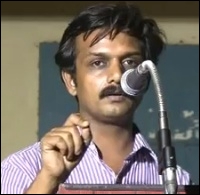
There was genocide before the war and there is genocide after the war. Before there was a militant organization to counter it, now there is nobody. The genocide that takes place after the war needs our full attention.
Tamil Nadu should be aware of its geopolitical importance to take right moves, while the land of Tamils is fast becoming another Afghanistan in South Asia.
China that sets the String of Pearls and aspire for Blue-water Navy and the USA that now orchestrates regime changes to save its image and to control Chinese inroads are not really against each other. They only practice containment and in the process people perish.
Ilangkai (Sri Lanka) is in the highlight now as it is going to set the trend elsewhere. The next in line is the Karen nation in Burma.
The US and the EU broke the peace talks in the island. The US knows all what had happened during the war. There was close understanding between the US and the Rajapaksa regime and the US gave arms to Colombo through Israel.
The US needs the entire east coast of Sri Lanka.
Corruption is a weapon to bring in instability and corruption is encouraged to bring in instability. Corruption cannot be the cause for revolution but revolution can have corruption.
The popular uprisings in the world, including the Jasmine Revolution in West Asia and North Africa are planned and hijacked by the US, only to change the leaders and to escape the anti-US sentiments in the world.
They prepared Rajapaksa to destroy the LTTE. After the LTTE, Rajapaksa is not needed and the powers now bring in the war crimes investigation to ‘punish’ him. Rajapaksa is not our concern, but Tamil Eelam is our concern. Our fear is whether Tamils will get their justice. The US is known for differentiating punishment to the ‘criminal’ from delivery of justice to the victim.
The political replacement that took place in Tamil Nadu is analogous. They need some one acceptable in Tamil Nadu to endorse their agenda.
All except Tamils know that Tamil Nadu is the key factor.
The West may now hand over the task of ‘political solution’ to India. As it does now and then, India will dust the 13th Amendment.
There are three Tamil entities to handle.
The Tamil National Alliance (TNA) in the island will be handled both by India and the USA.
Whatever they impose in the island should find endorsement in Tamil Nadu. As Karunanidhi has lost the credibility there should be some one else who could evoke hopes in Tamil Nadu. Tamils need to be watchful. Tamil Nadu has already gone into global politics.
When the Tamil Nadu State Government is handled, there will be no one to raise voice in the Assembly.
The Communist Party of India (CPI) may talk, but it too looks at the issue within the framework of a ‘united Sri Lanka’.
Vaiko was purposefully sidelined earlier and now, as there shouldn’t exist anyone within the Assembly to raise the name Tamil Eelam.
The third entity, the diaspora and its committed section, is already pressurised heavily in many systematic ways in the West. When the stage is set, Rudrakumaran will be forced to accept what is set by the agenda.
When the BBC and the CNN blare out the virtues of the solution, the voices in Tamil Nadu will be feeble.
Our support to the war crimes investigation of the UN should be conditional. The UN panel report is incomplete, as it has not recognized the genocide in the island. Merely a regime change effected by the war crimes investigation cannot bring in lasting solutions to Eezham Tamils.
2,50,000 Tamils have been killed in the war of decades. Accepting wanting solutions is not doing justice to the killed.
We live in historic times.
Like SJV Chelvanayagam was firm in 1976 in Vaddukkoaddai Resolution calling for Tamil Eelam, like Pirapaharan was firm in 1987 against hoodwink solutions, Tamil Nadu has to be firm now.
 The war crimes the UN now speaks of, is not an isolated event. The root has to be addressed and answered. Governments in India and Sri Lanka always set the agenda and we in Tamil Nadu only respond to passing events of the agenda. Immersed in immediate issues we fail to raise the voice for the fundamental issue – the independence of Tamil Eelam.
Eezham Tamils have democratically mandated the Vaddukkoaddai Resolution and have re-mandated it in the diaspora recently.
War crimes investigation may be welcomed. But, without the recognition of the genocide and without the recognition that a national question was the reason, the investigation is meaningless.
Let those who don’t agree conduct a referendum through the UN and see.
Geopolitical analysis or regional political analysis of quality was rarely made from Tamil perspectives in Tamil Nadu in the past. Such analyses were always a monopoly of a so-called ‘national’ minded clan and their media in India.
Much of the sufferings of Tamils in India and outside, and the diplomatic woes of India in its southern flank were due to this lacuna, as analyses coming from Tamil Nadu perspectives meeting the rigours of international norms were never highlighted or they didn’t come at all, rising above the din of empty political rhetoric.
The way a new genre of Tamil analysts discussed the UN panel report last month in Chennai was very refreshing, amazingly transparent in the content of truth and casts away conventional analyses or psy-ops coming from enslaved universities, funded organizations and intelligence-operated strategic ‘think tanks’ into dustbin, commented an academic in Jaffna.
The most dangerous of the ‘analysis campaign’ after the genocidal war in Vanni is shedding crocodile tears for the war crimes to get political acceptance to post-war agendas, but refusing to examine why the affected should not be liberated and independent.
If successive constitutions since British times and post-British times have failed for more than a hundred years on the national question in the island, and if the logical end has reached the point of genocide, then there is no point in accusing the implementation of the present constitution or harping on constitutional reforms. There is something wrong with the very existence of this state as a single unit.
When the very word ‘Sri Lanka,’ ever since its constitutional inception, is associated with a genocidal state, anyone with common sense could tell why the Tamils can’t be ‘Sri Lankans’ in the island. Saying, “Tamils can be Sri Lankans” at this stage is only another way of putting an agenda to exterminate the nation of Eezham Tamils in the island.
Why don’t the political science pundits who always think of power interests tell us what global or civilization-benefits are there for humanity by Eezham Tamils not claiming their independence even when they face genocide, the academic in Jaffna asked.
Raman and Hariharan have lost the credibility with the war ending in genocide. So, there will be another set of analysts with seemingly new paradigms but with the old agenda, the academic further said.
The investigation on war crimes, covering all those who were involved with the crimes, is a responsibility of world humanity primarily for its own sake, if it wants progress from the suffocating state and power system of today. Even after becoming two states the Eezham Tamils and the Sinhalese have to strike reconciliation on their own, for their own survival in one island. But anyone concerned with war crimes or reconciliation today cannot pretend ignorance that neither a genuine war-crimes investigation nor genuine reconciliation is possible when the Eezham Tamils don’t have independence first.
The responsibility of Tamil Nadu, based on Tamil perspectives, which Tamil Nadu alone could do, is more than identifying itself with the global responsibility of war crimes investigation. The government of Ms. Jayalalitha may have taken carefully calculated initial steps in the right direction, but it should not be deviated by vicious forces that have a record of doing mischief in the region is the concern of global Tamils.
Thirumurukan Gandhi, K. Aiyanathan, Prof Paul Newman, Devasahayam, Rajendra Chozhan, Priya Thampi, Arul Ezhilan, Pandimadevi and DSS Mani, who have discussed the UN panel report in Thiyagaraya Nagar, Chennai on May 28, have boldly and explicitly brought out the intriguing aspects that affect affairs from moving in the right direction and what Tamil Nadu should do about them.
Such analyses should also reach the outside world for the benefit of global public opinion, the Jaffna academic commented, adding that with such quality of awakening and new thinking, the next generation of Tamil Nadu cannot be taken for a ride or be contained by anyone, without yielding into aspirations that are righteous.
The following are some points brought out by Thirumurukan in his analysis. The links for the full speeches of Thirumurukan and the other analysts in Tamil are given at the end:
Thirumurukan Gandhi
Tamil Nadu should be aware of its geopolitical importance to take right moves, while the land of Tamils is fast becoming another Afghanistan in South Asia.
China that sets the String of Pearls and aspire for Blue-water Navy and the USA that now orchestrates regime changes to save its image and to control Chinese inroads are not really against each other. They only practice containment and in the process people perish.
Ilangkai (Sri Lanka) is in the highlight now as it is going to set the trend elsewhere. The next in line is the Karen nation in Burma.
The US and the EU broke the peace talks in the island. The US knows all what had happened during the war. There was close understanding between the US and the Rajapaksa regime and the US gave arms to Colombo through Israel.
The US needs the entire east coast of Sri Lanka.
Corruption is a weapon to bring in instability and corruption is encouraged to bring in instability. Corruption cannot be the cause for revolution but revolution can have corruption.
The popular uprisings in the world, including the Jasmine Revolution in West Asia and North Africa are planned and hijacked by the US, only to change the leaders and to escape the anti-US sentiments in the world.
They prepared Rajapaksa to destroy the LTTE. After the LTTE, Rajapaksa is not needed and the powers now bring in the war crimes investigation to ‘punish’ him. Rajapaksa is not our concern, but Tamil Eelam is our concern. Our fear is whether Tamils will get their justice. The US is known for differentiating punishment to the ‘criminal’ from delivery of justice to the victim.
The political replacement that took place in Tamil Nadu is analogous. They need some one acceptable in Tamil Nadu to endorse their agenda.
All except Tamils know that Tamil Nadu is the key factor.
The West may now hand over the task of ‘political solution’ to India. As it does now and then, India will dust the 13th Amendment.
There are three Tamil entities to handle.
The Tamil National Alliance (TNA) in the island will be handled both by India and the USA.
Whatever they impose in the island should find endorsement in Tamil Nadu. As Karunanidhi has lost the credibility there should be some one else who could evoke hopes in Tamil Nadu. Tamils need to be watchful. Tamil Nadu has already gone into global politics.
When the Tamil Nadu State Government is handled, there will be no one to raise voice in the Assembly.
The Communist Party of India (CPI) may talk, but it too looks at the issue within the framework of a ‘united Sri Lanka’.
Vaiko was purposefully sidelined earlier and now, as there shouldn’t exist anyone within the Assembly to raise the name Tamil Eelam.
The third entity, the diaspora and its committed section, is already pressurised heavily in many systematic ways in the West. When the stage is set, Rudrakumaran will be forced to accept what is set by the agenda.
When the BBC and the CNN blare out the virtues of the solution, the voices in Tamil Nadu will be feeble.
Our support to the war crimes investigation of the UN should be conditional. The UN panel report is incomplete, as it has not recognized the genocide in the island. Merely a regime change effected by the war crimes investigation cannot bring in lasting solutions to Eezham Tamils.
2,50,000 Tamils have been killed in the war of decades. Accepting wanting solutions is not doing justice to the killed.
We live in historic times.
Like SJV Chelvanayagam was firm in 1976 in Vaddukkoaddai Resolution calling for Tamil Eelam, like Pirapaharan was firm in 1987 against hoodwink solutions, Tamil Nadu has to be firm now.

Eezham Tamils have democratically mandated the Vaddukkoaddai Resolution and have re-mandated it in the diaspora recently.
War crimes investigation may be welcomed. But, without the recognition of the genocide and without the recognition that a national question was the reason, the investigation is meaningless.
Let those who don’t agree conduct a referendum through the UN and see.
Subscribe to:
Posts
(
Atom
)


